
Post Cycle Therapy (PCT) Guide: Why It’s Crucial & How to Do It Right
November 15, 2025Introduction
Post Cycle Therapy (PCT) is one of the most important treatment procedures for professionals who have finished their anabolic steroid cycle. It brings back the normal testosterone levels, prevents hormone health from being affected in the long run, and keeps the muscle gains that were made during the steroid cycle. A good PCT provides an easier recovery process, keeps a positive mood, and has better performance results. Professional athletes taking top-notch performance-enhancing products from EvolveBioLabs can get a lot from a PCT plan that is well-designed and that not only preserves their results but also supports their health after every cycle.
1. What Is Post Cycle Therapy (PCT)?
Post Cycle Therapy (PCT) is a recovery procedure that is used after an anabolic steroid cycle. The body’s natural testosterone production is reduced during the steroid cycle due to external hormones, prompting the body to stop producing its own.
A PCT regimen helps to restart the natural testosterone production, thereby normalizing the hormonal system. PCT comprises the utilization of certain drugs or dietary supplements that keep hormones at a steady level, stop estrogen from bouncing back, and take care of one's health in a complete manner.
2. Why PCT Is Crucial After a Steroid Cycle
Skipping PCT is one of the biggest mistakes many beginners make. Here’s why PCT is essential:
1. Restores Natural Testosterone Production
Anabolic steroids inhibit the Hypothalamic-Pituitary-Gonadal (HPG) axis and provide low levels of testosterone. PCT helps restimulate LH (Luteinizing Hormone) and FSH (Follicle-Stimulating Hormone) to stimulate natural testosterone production.
2. Prevents Estrogen-Related Side Effects
When testosterone drops suddenly after a cycle, estrogen levels can spike.
PCT controls estrogen to prevent:
- Water retention
- Mood swings
- Fat gain
- Gynecomastia (male breast enlargement)
3. Protects Muscle Mass & Strength
Without PCT, low testosterone leads to:
- Muscle loss
- Loss of strength
- Slower metabolism
4. Supports Mood & Energy Levels
Hormonal imbalance can cause:
- Depression
- Low libido
- Fatigue
- Irritability
5. Prevents Long-Term Hormonal Damage
Neglecting PCT can result in long-term effects of testosterone suppression, which can take months (or years) to fully recover naturally.
3. Common PCT Medications & Their Purpose
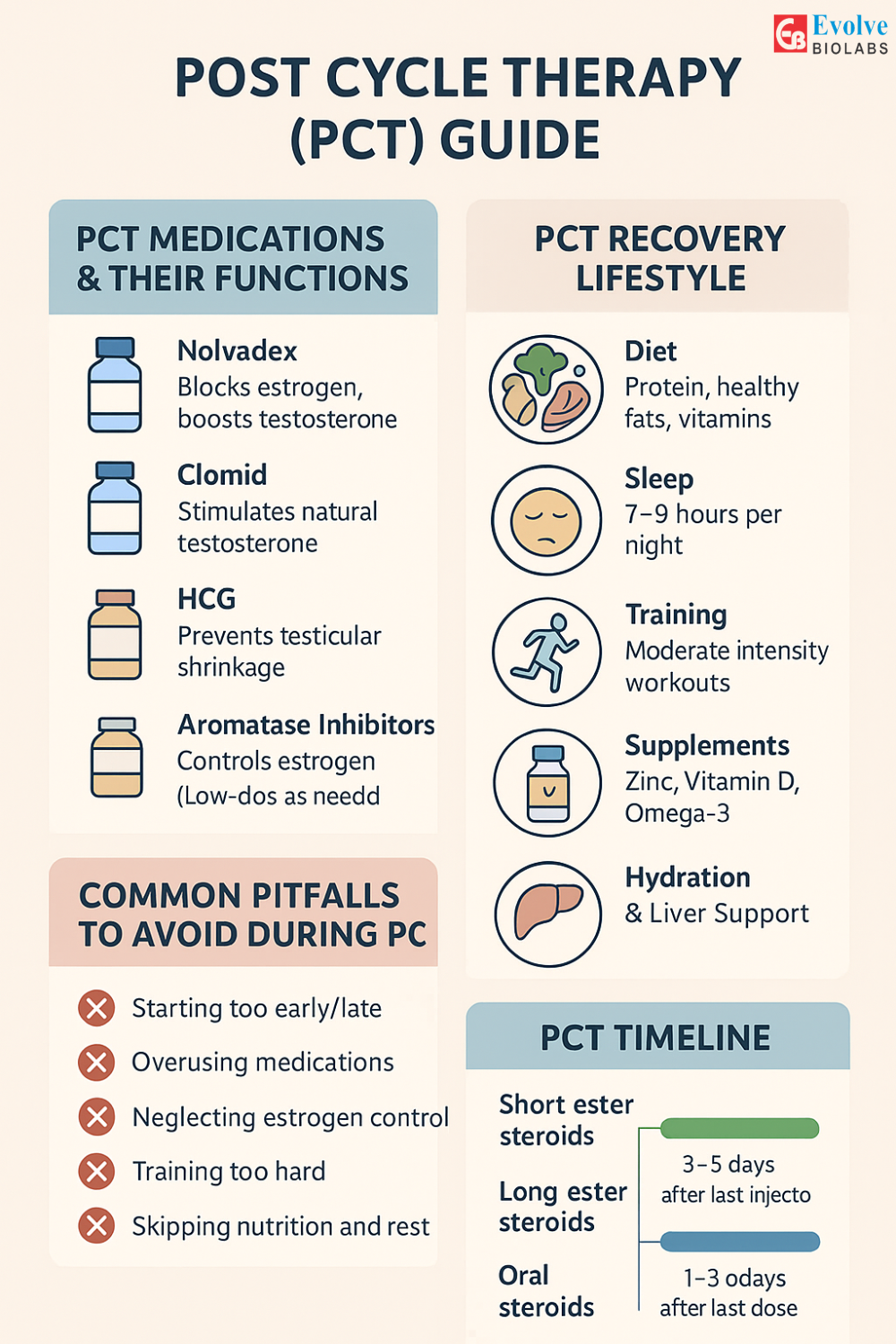
1. Nolvadex (Tamoxifen)
- Blocks estrogen receptors
- Prevents gynecomastia
- Boosts natural testosterone
Typical dosage: 20–40 mg daily
2. Clomid (Clomiphene Citrate)
- Stimulates LH & FSH
- Restarts natural testosterone production
- Often combined with Nolvadex
Typical dosage: 25–50 mg daily
3. HCG (Human Chorionic Gonadotropin)
- Mimics LH
- Prevents testicular shrinkage
- Used at the end of the cycle or early PCT
Typical dosage: 500–1500 IU 2–3 times a week (short period only)
4. Aromatase Inhibitors (AIs)
- Examples: Aromasin, Arimidex
- Control high estrogen levels
- Prevent rebound estrogen during PCT
Typical dosage: Low-dose as needed
4. How Diet and Lifestyle Impact PCT Results
PCT is not only successful based on medications and supplements, but it is also dependent on how well you support your body with lifestyle and dietary choices. Eating a balanced diet inclusive of protein will help to preserve muscle, and healthy fats will support optimal hormone functioning. Sleep increases recoverable testosterone levels, and decreased alcohol consumption will help the liver function better.
Light to moderate training can help retain strength without overwhelming the recovering hormonal system. Combining the appropriate PCT with educated lifestyle habits can enhance the speed, safety, and stability of your recovery.
5. Understanding Hormone Fluctuations During PCT
Post-cycle therapy is a period during which the body experiences major hormonal changes as it goes from using external hormones to internal testosterone production.
At this time, estrogen may be higher than normal and testosterone lower than normal, hence the mood swings, reduced sexual desire, and water retention. A full knowledge of these fluctuations will be of great help to the users in maintaining patience and sticking to their PCT protocol.
Through estrogen management, testosterone recovery support, and symptom monitoring, one can achieve a more pleasant and efficient hormonal reset after each cycle.
6. Mistakes to Avoid During PCT
Even with the right PCT protocol, certain mistakes can hinder recovery and reduce your gains. Avoid these common pitfalls:
Beginning PCT at the wrong time: Starting either too late or too early can decrease effectiveness.
Overly aggressive doses: Big doses of Clomid or Nolvadex can lead to side effects.
Neglecting estrogen control: Elevated estrogen could lead to bloating, fat gain, and gynecomastia.
Overtraining: Your body requires a moderate level of exercise to safely replenish hormones.
Poor diet: Low protein, healthy fats, and vitamin deficiencies will slow your recovery.
Not resting and sleeping: 7–9 hours of quality sleep daily is required for hormonal recovery.
Signs Your PCT Is Working
A successful PCT will show improvements such as:
- Increased energy levels
- Higher libido
- Improved mood and stability
- Reduction in bloating and water retention
- Maintaining muscle and strength
- Balanced testosterone-to-estrogen ratio
Conclusion
Post Cycle Therapy is the practice that every bodybuilder has to see. It is a real cornerstone of hormonal balance restoration, long-lasting health protection, and, more importantly, muscle gains during steroid withdrawal. Safe and effective recovery is possible through the correct timing, the use of the well-known compounds such as Nolvadex and Clomid, and the right nutrition and supplements. An ideal PCT guarantees that your progress does not stop after the cycle, and thus, it becomes a vital aspect of every performance-enhancement journey.
FAQs
1. Is PCT necessary after every steroid cycle?
Yes. Any cycle that suppresses testosterone requires a proper PCT to protect health and maintain gains.
2. Can I gain muscle during PCT?
The main goal is recovery, not growth—but a good PCT helps preserve most of the muscle gained.
3. Can natural supplements replace PCT medications?
No. Supplements support recovery, but cannot restart testosterone alone. Medications like Clomid or Nolvadex are essential.
Read More:
Steroids for Beginners: Everything You Need to Know About Anabolics
The Role of Steroids in High-Intensity Interval Training (HIIT)
Posted by

At Evolve Biolabs our primary focus is on cutting-edge performance-enhancing drugs. We are committed to manufacturing the most potent & purest steroid formulas and distributing our products globally. We use only top-quality Active Pharmaceutical Ingredients (APIs), following USP/BP, and follow strict processes to ensure all our products meet the highest quality standards in the industry.
Copyright © . All right reserved. Evolve Biolabs